



A cultivator is still one of the most reliable tools in modern agriculture. Row crop farmers use this equipment to manage weeds. Cultivators improve soil conditions. They also support stronger plant development.
Farming operations today face shifting weather patterns. They also deal with growing weed resistance. But a cultivator provides solutions to these issues. These solutions are both practical and effective.
Here are five problems farmers can address with the right cultivation equipment.
Understanding Cultivators and Their Role in Row Crop Farming
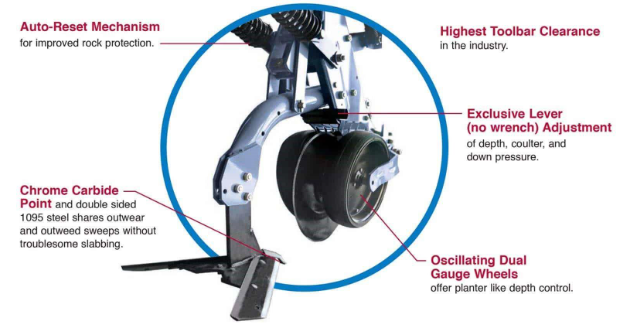
A cultivator uses ground-engaging tools. These tools disrupt soil and remove weeds. This results in improved field conditions. Also, this approach reduces plant competition without relying solely on herbicides. Cultivation also helps loosen soil. When soil is loose, aeration improves and allows moisture to reach plant roots.
Many farms explore different options through cultivator dealers. This is especially true when they want equipment that fits their soil type. Farmers must also consider field layout and their preferred weed management style. It is essential to understand the purpose of cultivation. This helps farmers choose tools that support their long-term goals.
Problem 1: Weed Pressure From Resistant Species
Herbicide resistance continues to rise. This isn’t just in one area. This is across many regions. When chemicals lose effectiveness, weeds compete more aggressively with crops. A row crop cultivator helps interrupt weed growth early in the season. This reduces pressure without increasing chemical use.
Mechanical control gives farmers another tool to manage resistant weeds. This also protects yield potential. Farmers find this is particularly helpful in fields where herbicide rotation options are limited.
Problem 2: Soil Crusting and Poor Aeration
Heavy rainfall or poor soil structure can lead to surface crusting. When this occurs, seedlings struggle to break through. Also, root development slows. A cultivator breaks up soil crusts. This restores airflow. It also helps moisture move more evenly through the soil profile.
This is one reason many operations still rely on row cultivators. They provide gentle but effective soil disturbance. It also improves plant health at key growth stages.
Problem 3: Early-Season Moisture Management
Too much moisture can restrict oxygen in the root zone. It can also delay crop development. Cultivation can help manage excess moisture. It does so by disrupting compacted soil and allowing roots to breathe. It also helps warm the soil faster during cool early-season conditions.
Farmers often turn to organic cultivators to solve this issue. This doesn’t require chemical inputs. The added benefit is that the process supports healthier soil structure over time.
.
.
Problem 4: Improving Uniformity Across a Field
Uneven emergence and soil variation impact plant performance. As does inconsistent residue levels. A cultivator helps create a more uniform environment. The cultivator smooths soil conditions and manages weeds consistently across the row.
Even fields with small variations in slope or texture can see noticeable improvement. Many large-acre producers have begun working with high speed cultivator dealers to adopt equipment that covers more ground while maintaining accuracy.
Problem 5: Reducing Dependence on Herbicides
While chemical control remains important, many farmers want to reduce input costs and rely more on mechanical options. A cultivator provides a reliable, non-chemical solution for weed control.
This approach supports long-term sustainability goals and helps meet customer demand for responsible farming practices. Many producers use a combination of chemical and mechanical control to keep fields productive and resilient.
What Benefits Do Professional-Grade Cultivators Provide?
Farmers use cultivators for several reasons that directly improve field performance. Key benefits include:
- Better early-season weed control. Cultivation removes weeds before they become competitive threats.
- Improved soil structure. Looser soil supports better root development and moisture movement.
- Lower input costs. Reduced chemical use helps manage annual expenses.
- Enhanced crop uniformity. Consistent field conditions lead to more even plant growth.
- More resilience against resistant weeds. Mechanical control provides options when chemicals lose effectiveness.
These advantages support long-term productivity and field health.
Industries and Operations That Depend on Cultivators
Row crop farming remains the primary user of cultivation tools. Corn and soybean growers depend on consistent weed control and soil improvement. Specialty crop growers also use cultivation to manage weeds in vegetable and organic systems.
We regularly work with farmers who want equipment tailored to their region and field needs. Many choose local cultivator dealers to get advice on shank style, spacing, and adjustments that fit their operation. Others choose tools that pair well with guidance systems for more accurate cultivation passes.
Growers choose Hiniker because we offer:
- More than 50 years of experience in farm equipment manufacturing
- Reliable tools designed for tough Midwestern field conditions
- Strong frames and components for long-term use
- Dealer networks that help match equipment to specific field needs
- A reputation built on dependable, farmer-focused design
Cultivator FAQs
Are cultivators still useful in modern high-acreage operations?
Yes. Many large farms use cultivation as part of integrated weed management. It supports chemical efficiency and helps maintain uniform field conditions.
Can cultivators help reduce herbicide resistance issues?
Mechanical control reduces reliance on chemicals and helps manage resistant weed populations.
Do cultivators work with precision guidance systems?
Many cultivators can be paired with guidance tools for more accurate row alignment and reduced crop disturbance.
Every successful farming operation relies on hard work, the right people, and the proper equipment – that’s where Hiniker comes in. When you need the latest equipment to make your farm operations as efficient as possible, our team is ready to assist.
Hiniker is proud to be one of the most reliable sources when it comes to farm equipment manufacturing. Since 1970, we have been building durable and productive equipment to help our friends in the agriculture community.

We carry the latest equipment, whether it’s cultivators, cover crop seeders, rate controllers, shredders, windrowers, or a forage chopper. Let Hiniker assist you with all your farming equipment needs.
Find your Hiniker Dealer today to find out more about our amazing agricultural equipment.
You can also follow us on Facebook for the latest news and updates.