




So you have to choose between a cultivator and a tiller. It’s a big decision. And it can make all the difference in field performance and soil health. Not to mention your farm’s long-term productivity.
Both tools play important roles in crop production. Even though they serve different purposes. Understanding these differences helps growers make informed decisions that support their field conditions and farming style.
In this article, we take a deeper look at both types of equipment. Let’s break down what farmers should know before they purchase a cultivator or a tiller.
Why Compare Cultivators and Tillers Before Purchasing?
Field equipment is a long-term investment. Farmers must consider things like soil type and crop rotation. Then there’s weed pressure and operating style. All of these must be considered before deciding which tool is the right fit.
Cultivators and tillers manage the soil differently. So choosing the wrong tool can affect residue levels and seedbed structure. These are important factors for early-season crop performance.
Understanding Cultivators and Tillers: Key Differences
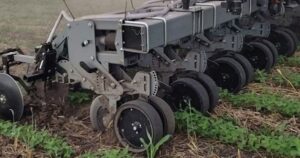
A cultivator is designed for weed control. It also assists with soil aeration between crop rows. The cultivator works during the growing season. It disturbs the soil gently without turning it completely. This helps reduce weed competition and improve soil moisture infiltration.
A tiller is built to break up compacted soil. It also prepares seedbeds and incorporates residue. It works deeper and more aggressively than a cultivator. A tiller is very useful for pre-plant soil work.
Farmers often explore row cultivators or row crop cultivator setups when they want targeted weed control. Not when they need complete soil turnover. Understanding these differences ensures that proper equipment is selected. This will assist with farmers’ crop goals and soil management strategies.
When Is a Cultivator the Better Choice?
A cultivator is typically the better tool when farmers want to control weeds mechanically. It’s also used to improve soil aeration. It does all this without disturbing the seedbed too much. Cultivators provide excellent in-season weed control. This is especially true when crops are at early growth stages.
Organic growers rely heavily on organic cultivators to remove weeds. They do so without chemical inputs. Many conventional farms also use cultivators to manage herbicide-resistant weeds. They also use cultivators to maintain soil structure during wet seasons.
Farmers who want guidance on speed or shank options often consult high speed cultivator dealers. Professional cultivator dealers can find equipment that improves efficiency. And it does not sacrifice crop safety.
When Does a Tiller Make More Sense?
A tiller is often the preferred choice during two different time periods. First, when preparing soil at the beginning of the season. Second, when preparing the soil after the season. Tillers break up compacted soil and incorporate residue. This helps create a smoother seedbed. Tillers are useful for fields with heavy residue or soil that needs more aggressive preparation.
However, frequent tillage can lead to soil structure issues over time. For this reason, many farmers combine occasional tilling with in-season cultivation. Then enhances overall soil health.
.
.
Our Approach to Designing Effective Cultivators
We design our cultivation equipment with strength, precision, and long-term reliability in mind. Our tools help growers manage weeds efficiently while protecting young plants. Durable components, accurate adjustments, and stable frames allow our cultivators to perform consistently in varying field conditions.
Our manufacturing experience helps us understand how farmers use cultivation tools across different crops and soil types. We focus on designs that balance performance with ease of use.
Benefits of Choosing the Right Cultivator for Field Conditions
Properly selected cultivators provide several advantages during the growing season. These benefits support improved crop performance and long-term soil health.
Key benefits include:
- Improved weed control. Cultivators remove early weeds before they compete with crops.
- Better soil structure. Light soil movement improves aeration and moisture distribution.
- Reduced input costs. Mechanical weed control helps lower herbicide use.
- More uniform plant stands. Consistent soil conditions support healthier growth.
- Flexibility across crops. Cultivators can be adjusted for different row widths and soil conditions.
Many growers connect with cultivator dealers to find tools that match field layouts, soil types, and crop rotations.
Farming Operations That Rely on Cultivators
Cultivators remain essential in several areas. There’s corn production. Soybean production. Specialty crops. And more. Cultivators provide reliable weed control in seasons when herbicides are less effective. Organic farms depend heavily on mechanical cultivation. This protects plant health without relying on chemicals.
Some operations combine cultivation with precision systems. Doing this improves accuracy and reduces plant disturbance. Others work with high speed cultivator dealers to find equipment capable of covering large acreages quickly. All while still maintaining the utmost precision.
Growers choose Hiniker because we offer:
- More than 50 years of agricultural equipment manufacturing experience
- Durable cultivation tools built for modern field conditions
- Easy-to-adjust components for precise performance
- Dealer support across key agricultural regions
- A commitment to farmer-centered engineering
FAQs About Cultivators vs. Tillers
Can a tiller replace a cultivator?
No. Tillers prepare soil before planting, while cultivators manage weeds and soil conditions during the growing season.
Do cultivators help reduce herbicide use?
Yes. Mechanical weed control supports long-term herbicide management and helps fight resistance.
Can cultivators be used in high-residue fields?
Many cultivators can be adjusted for residue-heavy conditions, depending on shank type and spacing.
Every successful farming operation relies on hard work, the right people, and the proper equipment – that’s where Hiniker comes in. When you need the latest equipment to make your farm operations as efficient as possible, our team is ready to assist.
Hiniker is proud to be one of the most reliable sources when it comes to farm equipment manufacturing. Since 1970, we have been building durable and productive equipment to help our friends in the agriculture community.

We carry the latest equipment, whether it’s cultivators, cover crop seeders, rate controllers, shredders, windrowers, or a forage chopper. Let Hiniker assist you with all your farming equipment needs.
Find your Hiniker Dealer today to find out more about our amazing agricultural equipment.
You can also follow us on Facebook for the latest news and updates.