


.
 .
.
A forage harvester functions through a defined process that transforms crop material into feed.
Modern livestock and dairy operations depend heavily on forage harvesters as essential machines. These machines handle all forage processing steps from cutting and gathering to chopping and distributing with exceptional speed and precision. To people who don’t understand the inner workings of a harvester this system appears as an intricate combination of mechanical components.
Gaining knowledge about the operational process of a forage harvester enables you to optimize equipment performance while minimizing wear and achieving superior quality outcomes. For over several decades, Hiniker has focused on developing dependable forage tools that enable American farmers to operate more efficiently. This article will detail each phase of forage harvesting, explain machine functionality, and highlight what distinguishes top-performing systems during field operations.
Forage Harvester — Processes Crops Into Silage Material
Forage harvesters exist to cut and convert crops such as corn, sorghum, alfalfa and small grains into a uniform chopped silage product. The machine completes multiple tasks during a single pass which eliminates the requirement for several separate field operations. The harvester becomes an essential component in operations requiring promptness and superior feed quality by maintaining freshness while maximizing nutritional content in forage.
Both small- and large-acreage farming operations require systems that deliver consistent performance and dependability. Hiniker designs equipment with durability tested in the field and simplicity at its core so you can prioritize outcomes instead of repairs.
Intake: Gathering and Feeding the Crop
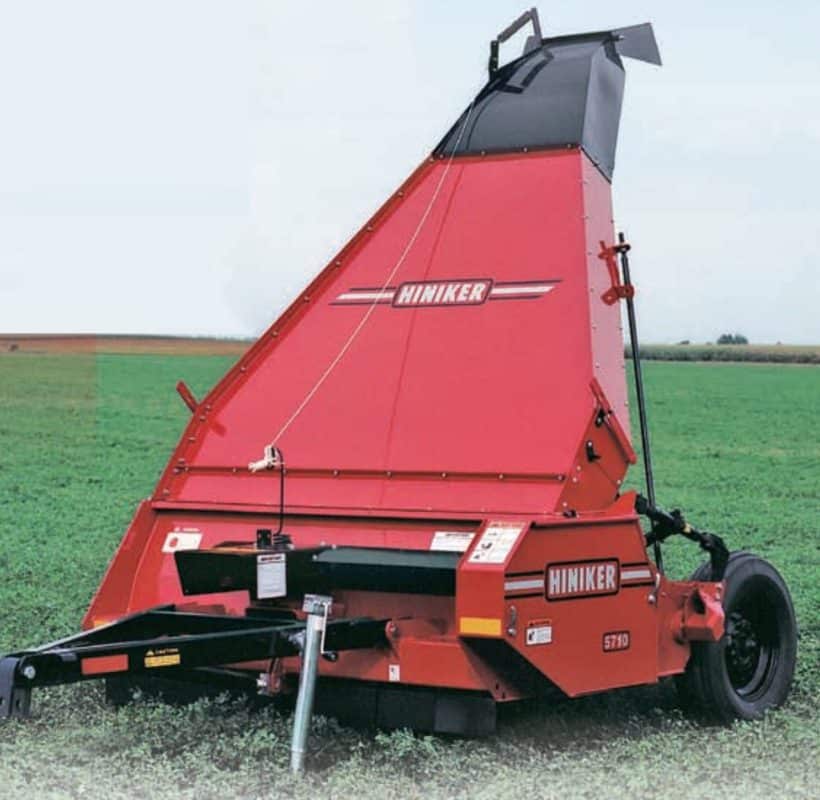
Forage processing initiates at the machine’s frontal area. The harvester collects crops from the field with its pickup head or row unit while it moves around. A flail forage harvester operates by using rotary motion flails to pull material into the processing chamber which makes it ideal for working in heavy-duty or high-residue environments.
Intake rollers or feed rolls push the crop forward to the cutting system after compressing the material. Feed rolls maintain consistent product flow and deliver crops evenly during the harvesting process. Uniform feeding remains critical because it stops clogging and keeps chop quality intact while enabling the machine to operate without issues.
Chopping and Processing: Breaking It Down
The collected material advances from the feed rollers to the chopping cylinder or cutterhead. The primary working component of the forage harvester is the cutterhead. Through high-speed rotation the cutterhead slices forage material into even lengths. The cutting lengths can generally be modified depending on the nutritional requirements, storage techniques and herd requirements.
Hiniker engineers forage chopper systems to deliver precise cutting performance while maintaining high processing speed. The knives are designed for optimal sharpness and balance while maintaining durability which protects surrounding parts and delivers precise cutting with every use.
Certain models feature a kernel processor or conditioning unit that helps break down plant material further but especially corn silage to enhance digestibility. The base chopping system proves to be fundamental for achieving uniform storage density and maintaining packing consistency.
.
.
.
Discharge: Moving Forage from Field to Storage
After chopping the material, it is transported to the discharge spout through the action of a blower or conveyor system. The chopped material is then transported to either a wagon, truck or storage area by way of a directing mechanism. Maintaining proper discharge speed and direction during forage transport ensures even loading and consistent feed quality while reducing compaction issues.
For windrow-based harvesting systems a stalk chopper or windrowing shredder helps manage residue and facilitates smooth forage collection when used with or before a forage harvester. Harvester efficiency and field pass numbers decrease when users optimize the timing and integration of these tools.
Maintenance and Design: Why Build Quality Matters
The heavy workload of cutting, compressing, and blowing thousands of pounds of material every hour leads to extreme wear on a machine. The manufacturers of flail forage harvesters need to produce equipment capable of handling intense operational stress. Hiniker’s equipment uses reinforced frames and heavy-duty bearings to create operator-friendly models which simplify maintenance while retaining top performance.
All components from the intake to the spout perform their tasks without adding complexity to the system. By maintaining a simple design approach manufacturers achieve fewer breakdowns while making operator training more efficient and decreasing long-term ownership expenses.
When you need new equipment or maintenance support, experienced flail forage harvester dealers provide precise advice based on your specific crop requirements and soil conditions together with your operational objectives.
Why Precision Matters in Forage Harvesting
The impressive mechanics of a forage harvester are secondary to producing high quality chopped material. Maintaining precise cutting lengths during silage harvest results in better compaction outcomes for storage silage. Clean slicing protects digestibility. Livestock experience less stress when they receive a regular feeding schedule which results in improved weight gain and increased milk production.
It’s essential to comprehend both the operation of a forage harvester and its proper maintenance in addition to its basic use. A deep knowledge of the process improves your ability to produce quality feed which helps maintain a robust herd and maximizes yields.
Conclusion: Trust the Process, Trust the Equipment
The forage harvester performs precise processing steps which include gathering, chopping, and discharging forage material. Feed quality along with storage success and operational efficiency depend on the vital role of each step in the process. We design equipment with the complete process in mind at Hiniker so farmers can rely on their machines to perform when it matters most.
Your forage operation will achieve smoother operation and increased profitability through appropriate knowledge combined with regular maintenance alongside a reliable equipment partner. Reach out to your local Hiniker Dealer to discover information about our reliable and proven forage systems and experience how superior design translates to superior results.
.
 .
.
Every successful farming operation relies on hard work, the right people, and the proper equipment – that’s where Hiniker comes in. When you need the latest equipment to make your farm operations as efficient as possible, our team is ready to assist.
Hiniker is proud to be one of the most reliable flail forage harvester manufacturers. Since 1970, we have been building durable and productive equipment to help our friends in the agriculture community.
We carry the latest equipment, whether it’s cultivators, cover crop seeders, rate controllers, shredders, windrowers, or a forage chopper. Let Hiniker assist you with all your farming equipment needs.
Find your Hiniker Dealer today to find out more about our amazing agricultural equipment.
Follow us on Facebook