



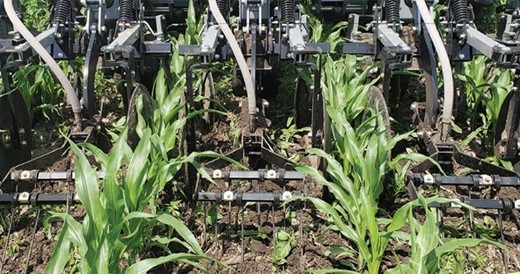
A cultivator continues to play a vital role for farmers. It helps them manage weeds and soil conditions. Not to mention, it plays a key role in early-season crop health.
Even as technology advances, mechanical field tools remain critical for protecting yield potential. They also help maintain consistency across acres.
This article explains why cultivation still matters in modern row crop systems.
Why Cultivation Still Matters in Today’s Farming Systems
Row crop farming has changed. Yet, the challenges have not disappeared. Weed pressure and variable weather still affect crop performance every season. So does soil compaction. Mechanical cultivation gives farmers direct control in the field. Even when conditions do not align with chemical or timing-based solutions.
Our Hiniker team has more than five decades of agricultural equipment manufacturing experience. So we understand how in-season management decisions influence long-term outcomes. Cultivation remains a dependable way to respond quickly to changing field conditions.
Understanding the Role of a Cultivator in Row Crop Production
A row crop cultivator is designed to manage weeds between rows. It also protects developing plants. The cultivator works in shallow areas and must be precise. It is designed to disrupt weed growth without excessive soil disturbance.
This approach supports better root development. It also helps crops access moisture and nutrients more effectively.
When adjusted correctly, a row crop cultivator provides targeted control. This complements modern farming practices rather than replacing them.
How Cultivators Support Weed Control and Soil Health
Mechanical weed control remains valuable. Especially as herbicide resistance increases. Cultivation removes weeds before they compete with crops. This reduces stress during critical growth stages. It also helps break surface crusting. Ultimately, this allows for better airflow and moisture movement in the root zone.
A cultivator gives farmers flexibility. It allows them to respond when chemical options are limited and when weather delays other treatments. This adaptability is one reason cultivation continues to fit into progressive farming systems.
.
.
Our Approach to Building Reliable Cultivation Equipment
We design cultivation tools to deliver consistent performance under real field conditions. Our equipment focuses on durability, precise adjustments, and stability across varying soil types. Farmers need tools that work when timing is tight and conditions are unpredictable.
Our experience working alongside cultivator manufacturers has reinforced how important practical design and field-tested performance are for long-term success.
Benefits of Using Cultivators in Modern Row Crop Farming
Cultivation provides benefits that extend beyond weed removal. These advantages support stronger crops and more consistent fields.
Key benefits include:
- Reduced early season weed competition
- Improved soil aeration and moisture movement
- Lower reliance on chemical inputs
- Better crop uniformity across rows
- Increased flexibility during challenging seasons
Each benefit contributes to healthier plants and more predictable outcomes.
How Cultivators Fit Into Different Tillage Systems
Cultivation adapts well to a range of farming approaches. In ridge systems, ridge-till cultivators help maintain row structure while controlling weeds. In conservation-focused operations, no-till cultivators manage weeds without disturbing residue or soil structure.
This versatility allows farmers to integrate cultivation into systems that prioritize soil protection while still maintaining effective control.
The Role of Dealer Support in Cultivation Success
Proper setup and adjustment are essential for effective cultivation. Many farmers rely on cultivator dealers for guidance on spacing, depth, and configuration based on local soil and crop conditions. Dealer expertise helps ensure equipment performs as intended from the first pass through the field.
Why Choose Hiniker for Cultivation Equipment?
Hiniker has been building agricultural equipment since 1970. Our focus has always been on durability, reliability, and practical field performance. We understand that cultivation is about precision, timing, and trust in the equipment.
Farmers choose our tools because they are built to handle real-world demands and support consistent in-season management year after year.
FAQs About Cultivators in Modern Farming
Are cultivators still useful with today’s herbicide programs?
Yes. Mechanical control complements chemical programs and helps manage resistance.
Can cultivation support soil health goals?
Targeted soil movement improves airflow and moisture without excessive disturbance.
Do cultivators work in conservation systems?
Yes. Properly adjusted equipment fits well into ridge-till and no-till approaches.
A cultivator remains essential in modern row crop farming because it delivers control, flexibility, and consistency when conditions demand it. From weed management to soil health, cultivation supports stronger crops and more reliable yields across changing seasons. Its continued use reflects its value in today’s farming systems.
When it comes to premium farm equipment, Hiniker has you covered. Contact us today and let us help you get the right equipment for your specific needs.
.

.
We carry the latest equipment, whether it’s cultivators, cover crop seeders, rate controllers, shredders, windrowers, or a forage chopper. Let Hiniker assist you with all your farming equipment needs.
Find your Hiniker Dealer today to find out more about our amazing agricultural equipment.
You can also follow us on Facebook for the latest news and updates.