



Choosing the right field equipment has a direct impact on soil health. It can also impact weed control and long-term yields. A cultivator serves a very different purpose than traditional tillage tools. Yet, the two are often compared during buying decisions. Understanding how each tool functions helps farmers protect crops and manage soil properly. It also helps them make smarter equipment investments.
Why Do Farmers Compare Cultivators and Tillage Equipment?
Both tools work the soil. However, they are designed for different jobs and timing. Tillage equipment prepares fields before planting. Cultivation focuses on in-season management. Confusing these roles can lead to unnecessary soil disturbance or missed weed control opportunities.
Our Hiniker team has more than 50 years of agricultural equipment manufacturing experience. We have seen how choosing the right tool for the right task improves consistency across the entire growing season.
Understanding the Role of a Cultivator in Modern Farming
A cultivator is designed to manage weeds and improve soil aeration. This protects crops during active growth. It targets weeds without turning over the entire soil profile. This approach supports healthier root systems and preserves soil structure.
Many farmers work with cultivator dealers to select setups that match crop spacing and soil type. Your dealer should also consider the growth stage when helping you choose the right equipment. A properly configured system allows growers to control weeds without disrupting the seedbed or damaging crops.
How Tillage Equipment Serves a Different Purpose
Tillage equipment is typically used before planting or after harvesting. Its goal is to prepare the seedbed and incorporate residue or relieve compaction. While effective for those tasks, tillage disturbs more soil. This process can impact moisture retention if it’s overused.
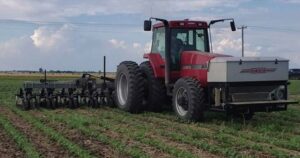
A row crop cultivator fills the gap during the growing season. It offers targeted soil movement when crops are already established. This distinction is why many operations use both tools. And both must be used at the appropriate time.
Comparing Soil Impact and Crop Protection
Soil structure is one of the biggest differences between cultivation and tillage.
Tillage breaks and turns the soil. This process can increase erosion risk if conditions are not ideal.
Cultivation focuses on surface-level control. This leaves deeper soil layers intact.
Systems such as ridge-till cultivators rely on precision to maintain ridges while controlling weeds. No-till cultivators are designed to manage weeds without disturbing residue or soil structure. These systems highlight how cultivation supports conservation-focused practices when adjusted correctly.
.
.
Our Approach to Designing Effective Cultivator Equipment
We design cultivation tools to give farmers control without unnecessary complexity. Our equipment emphasizes durability, precise adjustments, and consistent performance across changing field conditions. Easy setup and reliable components allow operators to make timely passes without risking crop damage.
Our experience working alongside row cultivator manufacturers has reinforced how important adjustability and stability are for in-season field work.
Benefits of Choosing Cultivation Over Excessive Tillage
When used correctly, cultivation offers several advantages that support yield and soil health.
Key benefits include:
- Reduced soil disturbance during the growing season
- Improved weed control without full-field disruption
- Better moisture retention in active root zones
- Lower erosion risk compared to aggressive tillage
- Greater flexibility across different farming systems
These benefits help farmers maintain consistency without sacrificing long-term soil productivity.
When Farmers Use Both Tools Together
Many successful operations use tillage and cultivation as complementary tools. Tillage prepares the field before planting, while cultivation manages weeds and soil conditions after emergence. This balanced approach allows farmers to respond to weather, residue levels, and weed pressure more effectively.
Working with experienced cultivator dealers helps farmers integrate equipment into their existing systems without overlap or inefficiency.
Why Choose Hiniker for Cultivation Equipment?
Hiniker has been building dependable agricultural equipment since 1970. Our focus has always been on practical design, durability, and field-proven performance. We understand that equipment choices influence more than one season, and we design tools that support long-term success.
Farmers trust our equipment because it performs reliably under real conditions and supports precise in-season management.
FAQs About Cultivators and Tillage Equipment
Can cultivation replace tillage completely?
In some systems, yes. Many conservation-focused operations rely more on cultivation, depending on soil and residue conditions.
Is cultivation effective for weed control in large-acre operations?
Yes. When properly set up, cultivation provides consistent control across large fields.
Does cultivation help protect soil health?
Targeted soil movement supports root development while preserving soil structure.
Understanding the difference between cultivation and tillage helps farmers make better equipment decisions. A cultivator supports in-season weed control and soil management, while tillage prepares fields before planting. Knowing when and how to use each tool protects yield, improves efficiency, and supports long-term soil health.
When it comes to premium farm equipment, Hiniker has you covered. Contact us today and let us help you get the right equipment for your specific needs.
.
.
We carry the latest equipment, whether it’s cultivators, cover crop seeders, rate controllers, shredders, windrowers, or a forage chopper. Let Hiniker assist you with all your farming equipment needs.
Find your Hiniker Dealer today to find out more about our amazing agricultural equipment.
You can also follow us on Facebook for the latest news and updates.