



.
.
Cultivator performance can look great on paper and still fall apart in the field. Most issues don’t come from the machine itself, they come from conditions that limit how well it can do its job.
If you’ve ever made a pass and come back a few days later wondering why weeds are still standing, you’re not alone. The problem usually isn’t that cultivation doesn’t work. It’s that the conditions weren’t right for it to work well. Cultivator manufacturers know the difference.
Wet soil is the fastest way to lose effectiveness
Moisture changes everything.
When soil is too wet, a cultivator doesn’t uproot weeds cleanly. Instead of pulling them out and letting them dry, it moves them around and re-covers them with soil.
That leads to:
- Weeds re-rooting
- Uneven soil flow
- Clumping that reduces effectiveness
Even a well-timed pass can fail if the soil hasn’t dried enough. This is one of the most common reasons growers see poor results.
Hard, crusted soil creates a different problem
On the other end of the spectrum, dry and crusted soil can limit penetration.
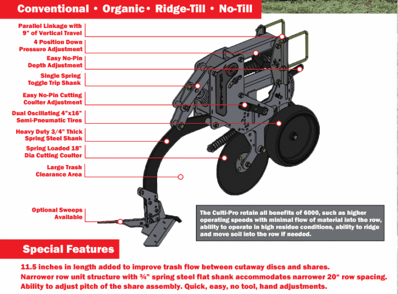
A row crop cultivator needs to get under the weed to lift it out. If the soil is too hard, sweeps may ride up instead of cutting properly.
That leads to:
- Weeds being cut but not removed
- Roots staying intact
- Faster regrowth
In these conditions, depth control becomes critical. But even with adjustments, performance may still be limited.
Timing matters more than most expect
Weed size plays a big role in success.
Small weeds are easier to uproot and dry out. Larger weeds have stronger root systems and are harder to remove completely.
A cultivator pass that’s a few days late can reduce effectiveness more than people expect.
That’s why timing often matters more than equipment choice. Even the best setup struggles if weeds are already established.
Residue levels can interfere with soil movement
Heavy residue changes how soil flows through the machine.
Corn stalks, soybean residue, or cover crop material can:
- Block proper soil movement
- Prevent clean weed removal
- Cause uneven coverage
This is especially noticeable in fields with high residue from previous seasons.
Some setups handle residue better than others, which is why growers often compare options from different cultivator manufacturers when dealing with these conditions.
Speed can work against you
Faster isn’t always better.
High speed cultivators are built to cover ground quickly, but speed can reduce precision, especially in tougher conditions.
At higher speeds:
- Soil control becomes less consistent
- Weed removal can be less complete
- Crop safety margins get tighter
Speed works best when conditions are ideal. When they’re not, slowing down often improves results.
.
.
Uneven emergence complicates everything
Not all crops emerge at the same time. That creates uneven growth stages across the field, which makes cultivation more difficult.
With uneven emergence:
- Some plants are more vulnerable to damage
- Others are already competing with weeds
- Ideal timing becomes harder to hit
This forces operators to balance weed control with crop safety, which isn’t always simple.
Operator setup makes a bigger difference than expected
Even in good conditions, setup matters. Depth, spacing, and alignment all affect how well a cultivator performs.
Common setup issues include:
- Running too shallow
- Uneven depth across rows
- Misaligned units
These problems reduce effectiveness quickly.
Working with an experienced row crop cultivator dealer can help fine-tune setup and avoid these issues before they impact performance.
Field variability creates inconsistent results
Most fields aren’t uniform.
You might have:
- Wet spots in one area
- Hard ground in another
- Heavy residue in certain sections
That variability makes it difficult to maintain consistent performance across the entire field. One pass might work perfectly in one area and struggle in another.
Weather after cultivation matters too
What happens after your pass is just as important.
If it rains shortly after cultivation:
- Uprooted weeds may re-establish
- Soil can settle back around roots
- Overall effectiveness drops
Dry conditions after cultivation help weeds die off more completely. This is one factor you can’t control, but it still affects results.
When cultivation struggles, it’s usually not the tool
It’s easy to blame the equipment when results fall short.
But most of the time, poor performance comes from:
- Soil conditions
- Timing
- Residue levels
- Weather patterns
A cultivator works best when those factors line up. When they don’t, even the best machine has limits.
When cultivators don’t work, and what to do about it
The key is recognizing when conditions aren’t ideal.
Sometimes the best decision is to:
- Wait for better soil conditions
- Adjust speed or depth
- Accept that results may be limited
Other times, it means combining methods, using cultivation alongside other weed control strategies. The goal isn’t perfect control every time. It’s consistent results over the season.
FAQs
Why didn’t my cultivator remove weeds effectively?
Wet soil, late timing, or improper depth are common reasons. If weeds aren’t uprooted cleanly, they can re-root and continue growing.
Can high speed cultivators work in tough conditions?
Sometimes, but performance usually drops when conditions aren’t ideal. Slowing down often improves results in difficult fields.
Should I skip cultivation if conditions aren’t right?
In some cases, yes. Running in poor conditions can reduce effectiveness and waste time. Waiting a short period for better conditions can lead to better results.
. .
.
Tired of Fighting Your Farm Equipment? Let’s Make It Easier.
Reach out to us online at Hiniker to fill out a form or call us at 507-625-6621
We are here to assist you with all your farm equipment needs. We carry the latest equipment, whether it’s cultivators, cover crop seeders, rate controllers, shredders, windrowers, or a forage chopper.
Find your Hiniker Dealer today to find out more about our amazing agricultural equipment.
You can also follow us on Facebook for the latest news and updates.