



.
.
Forage harvest isn’t just about cutting crop. It’s about sizing, consistency, and feed quality. Livestock performance depends on uniform material. Poor sizing affects packing density, fermentation, and digestibility. That’s why equipment choice matters more than many realize.
In operations where precision matters, a forage chopper becomes more than just a cutter. It becomes a quality control tool.
How a forage chopper differs from basic cutting equipment
A standard mower cuts crop and leaves it in windrows. That may work for hay drying, but it doesn’t produce uniform chopped forage ready for silage or immediate feeding.
A forage chopper cuts and processes material into smaller, consistent lengths in one pass. That sizing improves packing in bunkers and reduces air pockets during storage. Better packing leads to improved fermentation. That translates directly to feed value.
The role of a flail forage harvester
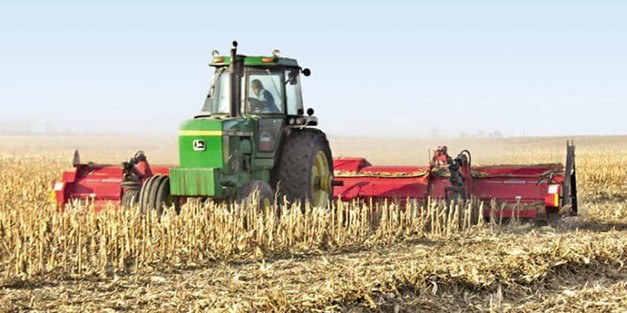
A flail forage harvester uses rotating flails to cut and process forage efficiently. Instead of relying solely on knife drums, flails strike crop multiple times, creating consistent particle length.
This system works especially well in grass, sorghum, and lighter forage crops where flexibility and adaptability matter. Many growers prefer flail systems for their ability to handle varied crop conditions without constant adjustment.
Manufacturer design affects performance
Equipment durability and consistency depend heavily on build quality. Working with established flail forage harvester manufacturers ensures rotor balance, frame integrity, and cutting precision hold up under extended use.
Field conditions aren’t always ideal. Stronger build quality reduces vibration and uneven sizing across large acre runs.
Dealer support matters as well. Reliable flail forage harvester dealers provide setup guidance and service access that keeps harvest windows from slipping. Forage harvest timing is tight. Delays reduce feed quality quickly.
.
.
When a forage harvester makes more sense
Not every forage crop requires aggressive chopping. Some systems rely on drying and baling instead. But when the goal is silage production, a dedicated forage harvester provides better control over cut length and processing consistency.
Moisture levels at harvest influence the decision. Higher moisture crops benefit most from controlled chop size and uniform distribution.
Operations feeding total mixed rations often see improved mixing performance when chop length remains consistent.
Capacity and field conditions
Large acreage operations need machines that maintain output without sacrificing cut quality.
Some growers compare forage units to tools like high capacity flail shredders when evaluating processing strength. While designed for different applications, capacity and rotor durability remain central considerations.
The difference lies in the goal. Shredders focus on residue reduction. A forage chopper focuses on feed consistency.
Those objectives require different internal configurations.
Consistency impacts feed value
Uniform chop size improves compaction in silage bunkers. Better compaction reduces oxygen infiltration. Reduced oxygen improves fermentation quality.
Inconsistent chop length creates sorting issues during feeding. Livestock may separate longer pieces from shorter ones, affecting ration balance.
Running a properly calibrated forage chopper reduces that variability. Over time, consistent processing supports steadier intake and performance.
Timing still matters most
Even the best equipment can’t compensate for poor timing. Harvesting too wet limits fermentation stability. Harvesting too dry reduces packing efficiency.
Operators who monitor crop maturity closely and match equipment capacity to field size typically produce the most consistent results. Equipment is only one part of the system, but it’s a major one.
Matching chop length to storage structure
Not every operation stores forage the same way. Bunker silos, drive-over piles, upright silos, and bag systems all respond differently to particle size and packing pressure.
Longer material can create air pockets in bunker systems, especially when packing tractors can’t achieve uniform density across the surface. Shorter, consistent chop improves compaction and limits oxygen infiltration. In bag systems, even sizing helps maintain consistent density from front to back, reducing weak fermentation zones.
Operators often underestimate how much cutting consistency affects feed stability months later. Variation of even a half inch across loads can change how tightly material packs. That difference influences temperature control during fermentation and long-term storage stability.
Moisture content interacts directly with chop length. Wetter forage compresses more easily but still requires uniform particle sizing to prevent seepage and spoilage. Drier forage demands tighter control to maintain packing density.
When harvest strategy aligns with storage structure, feed quality becomes more predictable. Equipment settings should match not just crop type, but also how and where that crop will be stored.
FAQs
Is a forage chopper necessary for all forage systems?
No. It’s most valuable in silage-focused operations where consistent particle size affects storage and feeding.
What crops work best with flail systems?
Grass, sorghum, and lighter forage crops often respond well to flail-based processing.
Does chop length really affect livestock performance?
Yes. Consistent particle size supports proper fermentation and ration uniformity.
Tired of Fighting Your Farm Equipment? Let’s Make It Easier.
.
.
Reach out to us online at Hiniker to fill out a form or call us at 507-625-6621
We are here to assist you with all your farm equipment needs. We carry the latest equipment, whether it’s cultivators, cover crop seeders, rate controllers, shredders, windrowers, or a forage chopper.
Find your Hiniker Dealer today to find out more about our amazing agricultural equipment.
You can also follow us on Facebook for the latest news and updates.