



.
.
Inter row seeder decisions usually come up at the same point every season—right when timing starts getting tight and you’re trying to figure out how to get cover crops established without sacrificing yield.
The question sounds simple: should you interseed into standing corn, or wait and drill after harvest?
The answer depends on timing, moisture, and how much risk you’re willing to take on establishment.
What an interseeder actually does in the field
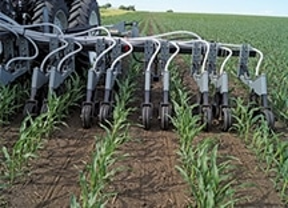
An inter row seeder is built to plant cover crops while your main crop is still standing.
It works between rows, placing seed into soil before harvest.
That changes everything about timing.
Instead of waiting until after harvest—when conditions may be dry or cold—you’re seeding earlier, often when moisture is still available.
How drilling after harvest compares
A cover crop seeder used as a drill operates after the main crop is removed.
This approach:
- Gives you a clean field to work with
- Allows full-width coverage
- Simplifies placement
But it comes with a tradeoff.
You’re at the mercy of post-harvest conditions. If it’s dry or temperatures drop quickly, establishment can suffer.
Timing is the biggest difference
This is where the decision usually gets made.
Interseeding:
- Earlier planting window
- Better chance at moisture
- More growing days before frost
Drilling:
- Later planting window
- Depends on harvest timing
- Often fewer growing days
In regions with shorter fall seasons, that earlier timing from an interseeding approach can make a noticeable difference.
Light and competition inside standing corn
One challenge with interseeding is competition. Cover crops seeded with a cover crop interseeder have to grow under a canopy.
That means:
- Less sunlight early on
- Slower initial growth
- Greater reliance on moisture and timing
If the corn canopy is too thick or planted too tightly, establishment can be inconsistent.
Soil contact and seed placement
Seed placement matters no matter which method you choose.
Interseeding systems:
- Work between rows
- Place seed with limited soil disturbance
- Depend on good timing for moisture
Drills:
- Provide consistent depth
- Improve soil-to-seed contact
- Often deliver more uniform emergence
That’s why some growers prefer drills—they offer more control over placement.
..
..
Residue changes the equation
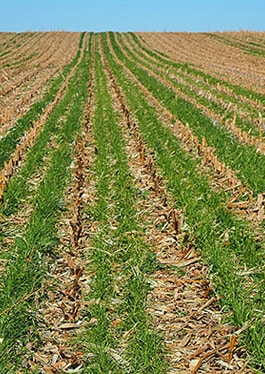
After harvest, residue becomes a major factor.
Heavy corn residue can:
- Interfere with seed placement
- Reduce soil contact
- Impact emergence
This is where cover crop seeding equipment needs to be matched carefully to conditions. Interseeding avoids some of that by planting before residue becomes a problem.
Risk vs reward in each approach
Interseeding carries more variability early on.
You’re dealing with:
- Canopy competition
- Weather during the growing season
- Timing relative to crop development
Drilling shifts the risk later:
- Weather after harvest
- Soil moisture availability
- Temperature drops
Neither method eliminates risk. They just move it to different parts of the season.
Flexibility in different operations
Some operations commit to one method. Others use both depending on conditions.
Interseeding works well when:
- You want earlier establishment
- Moisture is available mid-season
- You’re targeting longer cover crop growth
Drilling fits better when:
- You prefer simpler timing
- You want consistent placement
- Harvest conditions are predictable
Many growers adjust year to year based on weather patterns.
Equipment setup still makes the difference
Even the right method can struggle with poor setup.
Working with experienced providers of cover crop seeders helps ensure:
- Proper row spacing alignment
- Correct seeding depth
- Better overall performance
Small adjustments can significantly improve establishment rates.
Interseeder vs drill: which one works better?
It depends on what you’re trying to achieve. If your priority is maximizing growing time and taking advantage of in-season moisture, an inter row seeder often has the advantage.
If your priority is consistent placement and simpler operation, drilling after harvest may be the better choice. Both methods can work. The better option is the one that fits your timing, your fields, and your risk tolerance.
FAQs
Does interseeding always produce better cover crops?
Not always. It can improve timing and growth, but establishment depends on moisture, canopy conditions, and timing.
Is drilling more reliable than interseeding?
It’s often more consistent in terms of seed placement, but it depends heavily on post-harvest conditions.
Can you use both methods on the same farm?
Yes. Many growers use interseeding in some fields and drilling in others depending on timing and conditions.
.

.
Tired of Fighting Your Farm Equipment? Let’s Make It Easier.
Reach out to us online at Hiniker to fill out a form or call us at 507-625-6621
We are here to assist you with all your farm equipment needs. We carry the latest equipment, whether it’s cultivators, cover crop seeders, rate controllers, shredders, windrowers, or a forage chopper.
Find your Hiniker Dealer today to find out more about our amazing agricultural equipment.
You can also follow us on Facebook for the latest news and updates.