



.
.
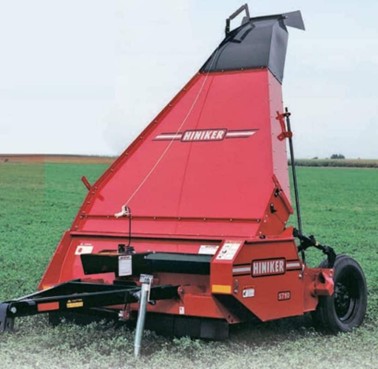
Flail forage harvester is one of those machines that gets compared to traditional choppers every season, especially when feed quality starts becoming a concern. The question usually sounds simple, what produces better feed? But once you look closer, it turns into a discussion with flail forage harvester dealers about consistency, throughput, and how the crop is handled from field cultivators to storage.
Both systems get the job done. They just do it differently.
How a flail forage harvester has a system processes forage
A flail forage harvester uses rotating flails to strip and process plant material.
Instead of cutting cleanly like a knife system, it:
- Strips leaves and softer material
- Breaks down stalks differently
- Produces a more varied particle mix
This approach changes how feed behaves during storage and feeding. It also tends to be more forgiving in uneven field conditions.
How a forage chopper handles the same crop
A traditional forage chopper relies on precision cutting.
It performs the tasks below:
- Slices material into uniform lengths
- Produces consistent particle size
- Focuses on clean cuts
That uniformity is one of its biggest strengths, especially for silage systems that depend on consistency. But it also requires more precision in setup and crop conditions.
Feed quality: uniformity vs variability
Feed quality often comes down to consistency.
A forage harvester produces:
- More uniform particle size
- Predictable packing in silage
- Consistent fermentation conditions
A flail system produces:
- Mixed particle sizes
- More leaf retention in some cases
- Different packing characteristics
Neither is automatically better. It depends on how the feed will be used.
Throughput differences in real conditions
Throughput isn’t just about speed. It’s about how well a machine handles varying conditions.
A flail forage harvester tends to:
- Handle uneven crops more easily
- Keep moving in inconsistent conditions
- Require less fine-tuning
A forage chopper can:
- Deliver high throughput in ideal conditions
- Slow down when conditions vary
- Require more adjustment to maintain performance
So throughput depends heavily on field variability.
Moisture levels and crop conditions
Crop moisture affects both systems differently.
Choppers perform best when:
- Moisture is within a narrow range
- Crop is consistent across the field
Flail systems tend to:
- Handle a wider range of moisture conditions
- Maintain performance even when crops vary
That flexibility can make a difference in unpredictable seasons.
.
.
Maintenance and operating differences
Maintenance requirements vary between the two systems.
Flail machines:
- Use multiple flails that wear over time
- Often require regular inspection
- May be simpler in certain areas
Choppers:
- Depend on sharp knives
- Require consistent sharpening
- Need precise adjustment
Working with experienced flail forage harvester manufacturers can help match the machine to your workload and maintenance expectations.
Matching equipment to feeding goals
What you’re feeding, and how, matters.
If your system depends on:
- Uniform silage
- Controlled fermentation
- Consistent ration mixing
A chopper often fits better.
If your system values:
- Flexibility in crop conditions
- Simpler operation
- Handling variability
A flail approach may be the better fit.
Dealer support still plays a role
Setup and support matter more than expected.
Working with knowledgeable flail forage harvester dealers can help:
- Optimize machine setup
- Improve consistency
- Reduce early-season issues
Even the best equipment needs proper adjustment to perform well.
Cost considerations beyond the machine
Cost isn’t just the purchase price.
You also need to consider:
- Maintenance time
- Replacement parts
- Fuel use
- Labor requirements
Different systems shift those costs in different ways. That’s why two operations can run different equipment and still end up with similar overall costs.
Flail Forage Harvester vs Forage Chopper: what actually delivers better results
The answer depends on what you value more, consistency or flexibility. A flail forage harvester tends to perform better in variable conditions and offers a different style of feed processing.
A forage chopper delivers uniform results when conditions are right and setup is dialed in. Neither machine is universally better. They just solve different problems.
FAQs
Does a flail forage harvester produce lower quality feed?
Not necessarily. It produces a different type of feed with more variability in particle size, which can still work well depending on your feeding program.
Is a forage chopper faster than a flail system?
In ideal conditions, yes. But performance can drop if crop conditions vary or setup isn’t adjusted properly.
Which machine is easier to operate?
Flail systems are often more forgiving in changing conditions, while choppers usually require more precise setup and adjustments.
.
 .
.
Tired of Fighting Your Farm Equipment? Let’s Make It Easier.
Reach out to us online at Hiniker to fill out a form or call us at 507-625-6621
We are here to assist you with all your farm equipment needs. We carry the latest equipment, whether it’s cultivators, cover crop seeders, rate controllers, shredders, windrowers, or a forage chopper.
Find your Hiniker Dealer today to find out more about our amazing agricultural equipment.
You can also follow us on Facebook for the latest news and updates.