




.
.
NH3 flow monitor is one of those terms that gets thrown around a lot, especially when talking about anhydrous systems. The problem is most people lump it together with rate controllers, even though they do very different jobs.
If you’re trying to decide what your system actually needs, understanding that difference matters more than you might expect. Choosing between an NH3 flow monitor and a rate controller isn’t just about picking a device—it’s about ensuring your anhydrous system runs efficiently and avoids costly mistakes.
A clear distinction with NH3 ammonia rate controllers can help you prevent under-application or over-application of ammonia, maintain consistent yields, and reduce downtime caused by troubleshooting the wrong piece of equipment. Taking the time to learn what each tool does and how it fits into your operation will empower you to make informed decisions, maximize productivity, and protect your investment in agricultural technology.
What an NH3 flow monitor does
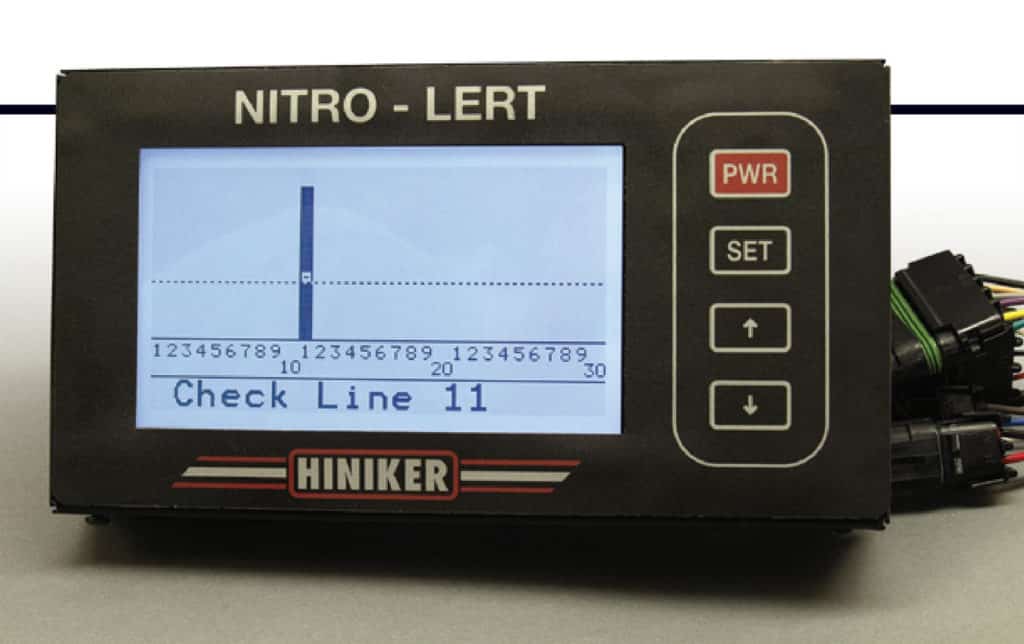
An NH3 flow monitor is built to track what’s happening in your system.
It measures:
- Flow through the lines
- Distribution across knives
- Whether product is moving where it should
That’s it. It monitors.
It doesn’t adjust anything. It doesn’t correct problems. It simply tells you what’s happening in real time.
This becomes important when something goes wrong.
Why monitoring matters in anhydrous systems
Anhydrous ammonia isn’t forgiving.
If one knife plugs or stops flowing, you won’t always see it from the cab. But it can leave streaks in the field that show up later in the season.
That’s where tools like an NH3 line monitor or flow system come into play.
They help you catch:
- Blockages
- Uneven distribution
- Application issues
Without monitoring, those problems often go unnoticed until yield is affected.
What a rate controller does differently
Automatic rate controllers take things a step further.
Instead of just monitoring, they:
- Adjust application rates
- Respond to speed changes
- Maintain consistent output
If you speed up, they increase flow.
If you slow down, they reduce it.
That keeps your application rate steady per acre.
.
.
Control vs visibility: the real difference
This is the simplest way to look at it. An NH3 flow monitor gives you visibility. An automatic rate controller gives you control. One tells you what’s happening. The other changes what’s happening. Many systems benefit from having both.
Where flow monitors make the most sense
Flow monitors are valuable when:
- You want to verify distribution
- You’re concerned about plugged knives
- You’ve had uneven application issues before
They act as an early warning system. For many growers, adding monitoring is the first step toward improving application accuracy.
Where rate controllers become necessary
Rate controllers are more about precision.
They’re a better fit when:
- You want consistent application across varying speeds
- You’re covering large acreage
- You’re trying to maximize input efficiency
Working with an experienced automatic rate controller manufacturer can help ensure the system is matched correctly to your equipment.
Why many systems use both
This isn’t always an either-or decision.
A system with both:
- Adjusts rates automatically
- Monitors distribution at the same time
That combination gives you:
- Consistency
- Visibility
- Fewer surprises in the field
It’s a more complete approach to application control.
Common mistakes when choosing between them
A lot of confusion comes from expecting one system to do both jobs. Some assume a flow monitor will fix rate issues. It won’t. Others assume a rate controller will catch distribution problems. It might not.
Understanding what each system does prevents those gaps.
Cost vs value in real use
Flow monitors are typically simpler systems. Lower upfront cost, but limited to monitoring.
Rate controllers:
- Higher upfront investment
- More functionality
- Greater long-term control
The value depends on how precise you need your application to be.
NH3 Flow Monitor vs Rate Controller: what do you actually need?
If your concern is knowing whether product is flowing correctly, a NH3 flow monitor covers that. If your concern is maintaining consistent rates across the field, a controller becomes more important. For many operations, the answer isn’t one or the other. It’s both working together.
FAQs
Do I need both a flow monitor and a rate controller?
Sometimes. If you want both visibility and control, running both systems gives you a more complete setup.
Will a rate controller fix uneven application?
It helps maintain consistent rates, but it won’t always detect distribution problems like plugged knives.
Is an NH3 flow monitor worth it?
If you’ve ever had uneven application or suspect flow issues, it can help catch problems early.
.
 .
.
Tired of Fighting Your Farm Equipment? Let’s Make It Easier.
Reach out to us online at Hiniker to fill out a form or call us at 507-625-6621
We are here to assist you with all your farm equipment needs. We carry the latest equipment, whether it’s cultivators, cover crop seeders, rate controllers, shredders, windrowers, or a forage chopper.
Find your Hiniker Dealer today to find out more about our amazing agricultural equipment.
You can also follow us on Facebook for the latest news and updates.