


When people ask what equipment is used in farming, they usually picture tractors and planters. Maybe a combine at harvest. What they do not always picture is what happens after crops come off the field.
Residue does not manage itself. Stalks stay standing. Material builds up. Fields that look finished often are not.
That is where flail mowers enters the picture. Not as a headline machine, but as one that quietly prepares fields for what comes next.
In many operations, that work is handled by flail shredders. They are not flashy. They are practical. And they solve problems that show up long after harvest is done.
Residue management is part of farming equipment planning
Farming does not end when grain is hauled away. Fields still need to be managed before the next cycle begins.
Heavy residue can interfere with planting. It can slow soil warming. It can create uneven emergence the following season.
Shredders break that residue down. They reduce material size and spread it evenly across the field. That simple change affects how equipment performs later.
This is why shredders are considered core farming equipment in many operations, even though they rarely get attention.
Flail shredders handle uneven material well
Not all residue is the same. Corn stalks behave differently than soybean stubble. Cover crops break down differently than crop residue.
A flail shredder uses rotating flails to cut and condition material. Instead of pushing residue over, it processes it.
This makes flail mowers especially effective in fields with heavy or uneven material. They leave residue distributed instead of piled.
That consistency matters when planting equipment comes back through the field.
High-capacity shredders support large operations
Scale changes how residue management is handled.
Larger fields mean tighter timelines. Equipment has to cover ground efficiently without sacrificing results.
That is where high capacity flail shredders come into play. These machines are built to process more material at higher speeds while maintaining cut quality.
They are designed for throughput. Strong frames. Consistent rotor speed. Stable operation across varying conditions.
For larger operations, these machines prevent residue management from becoming a bottleneck.
Windrowers play a different role
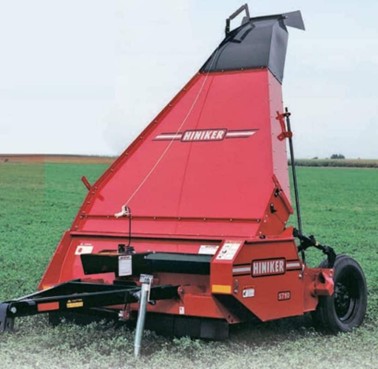
Shredders spread material. Windrowers collect it.
A windrower gathers residue into rows instead of distributing it across the field. This is useful when material needs to be removed or managed separately.
Some operations collect residue for bedding. Others manage stover differently depending on soil or rotation needs.
Windrowers give flexibility. They do not replace shredders. They complement them.
Flail windrowers combine both functions
Some equipment bridges the gap.
A flail windrower cuts residue and then places it into controlled rows. This allows material to be processed before being collected.
This approach reduces handling later. It also produces more uniform material for removal or baling.
Flail windrowers are often used where residue needs to be managed precisely rather than simply reduced.
Shredders support planting success indirectly
Residue management affects planting more than many operators realize.
Uneven residue can interfere with row cleaners. It can cause depth variation. It can affect seed-to-soil contact.
Shredders reduce those issues before planting equipment ever enters the field.
This is why flail mowers are often scheduled intentionally rather than used reactively. Fields that are managed early tend to plant more consistently later.
Shredders are not one-size-fits-all
Like most farm equipment, shredders are built for specific conditions.
Crop type matters. Field size matters. Residue volume matters.
This is where working with a flail shredder manufacturer becomes important. Design choices affect:
- Performance
- Rotor configuration
- Flail style
- Cutting width
Equipment that fits one operation may struggle in another.
Matching equipment to conditions avoids unnecessary passes and uneven results.
What shredders do not do
Shredders do not till soil. They do not prepare seedbeds. They do not replace planting equipment.
They manage surface material. That is their job.
Expecting a shredder to solve deeper soil issues leads to disappointment. Using it for its intended purpose leads to better field conditions overall.
Understanding that boundary is part of using farm equipment effectively.
Why shredders remain common farming equipment
Farming continues to evolve, but residue still exists.
New hybrids. New rotations. New management practices. None of them eliminate the need to manage what remains after harvest.
Shredders offer a mechanical solution that adapts to many systems. They work across crops. Across soil types. Across regions.
That versatility keeps them relevant.
FAQ
What equipment is used in farming after harvest?
Shredders and windrowers are commonly used to manage crop residue.
What does a flail shredder do?
It cuts and conditions residue, spreading it evenly across the field.
Are shredders necessary on all farms?
Not always, but they are common where residue volume is high.
What is the difference between a shredder and a windrower?
Shredders spread material. Windrowers collect it into rows.
Does residue management affect planting?
Yes. It influences planting consistency and equipment performance.
Tired of Fighting Your Farm Equipment? Let’s Make It Easier.
Reach out to us online at Hiniker to fill out a form or call us at 507-625-6621
We are here to assist you with all your farm equipment needs. We carry the latest equipment, whether it’s cultivators, cover crop seeders, rate controllers, shredders, windrowers, or a forage chopper.
Find your Hiniker Dealer today to find out more about our amazing agricultural equipment.
You can also follow us on Facebook for the latest news and updates.