



.
.
Cover crops have moved from a side practice to a core part of how many farms manage soil. They protect structure. Reduce erosion. Improve nutrient retention. But planting them introduces a new challenge.
Fields are already planted.
That reality changes everything. You cannot tear things up. You cannot disturb root zones. You cannot wait until after harvest if timing matters.
This is where specialized equipment becomes necessary. And why the inter row seeder has become such an important tool in modern farming systems.
Cover crop planting is about timing, not convenience
The value of a cover crop often depends on when it is planted. Earlier establishment means more growth. More root development. More benefit before winter.
Waiting until after harvest limits that window.
Inter row seeding equipment has planting that allows cover crops to be established while the main crop is still growing. That overlap changes how equipment must operate. Precision matters more than power.
This is not a job for general seeding tools.
Why inter row seeders exist
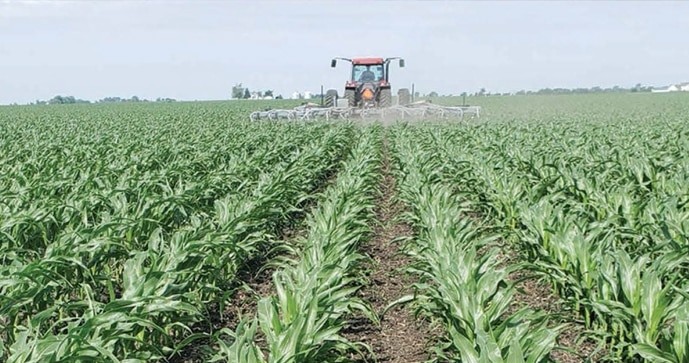
An inter row seeder places seed between existing crop rows without contacting the crop itself. That requires accurate spacing, stable tracking, and consistent depth control.
The goal is not speed. The goal is placement.
An inter row seeder allows cover crops to begin growing earlier without interfering with yield. That early start often makes the difference between a cover crop that establishes and one that struggles.
This approach works because it respects the existing crop instead of working around it later.
How cover crop seeders differ from planters
Traditional planters are designed for bare or prepared soil. They assume open ground and predictable conditions.
A cover crop seeder operates in standing crops. Residue is present. Roots are active. Space is limited.
That is why cover crop seeders are built differently. They focus on shallow placement. Minimal disturbance. Consistent spacing.
Instead of resetting the field, they add to it.
Interseeding requires a lighter touch
Interseeding is not about force. It is about timing and control.
A cover crop interseeder places seed in a narrow zone where it can establish without competing directly with the main crop. That placement reduces stress on both crops.
This method also avoids soil disruption that could introduce weeds or moisture loss.
Interseeding works because it is deliberate, not aggressive.
.
.
Equipment must adapt to changing conditions
Fields are not uniform. Crop height varies. Residue varies. Soil firmness changes.
Cover crop seeding equipment has to handle those variables without constant adjustment.
That is why modern cover crop seeding equipment focuses on consistent performance rather than complexity. The fewer corrections an operator has to make, the more reliable establishment becomes.
Reliability matters because inter-row seeding windows are short.
What an inter row seeder does not replace
An inter row seeder is not a primary planting tool. It does not replace a planter. It does not prepare soil.
It supplements the system.
Its role is to extend the growing season for cover crops without disrupting the main crop. Expecting it to do more than that creates frustration.
Used correctly, it fills a very specific gap.
Why earlier cover crop establishment matters
Cover crops planted earlier develop stronger root systems. They capture nutrients more effectively. They provide better soil coverage going into winter.
That earlier establishment often determines whether a cover crop delivers real benefits or just checks a box.
Inter-row seeding makes that timing possible without waiting for harvest.
That is why more farms are integrating this equipment into their systems instead of treating cover crops as an afterthought.
Precision matters more than horsepower
Cover crop seeding is not about pulling power. It is about placement accuracy.
Too deep and seeds struggle. Too shallow and establishment suffers. Too close to the row and competition increases.
An inter row seeder balances those factors. It places seed where conditions are most favorable.
That precision is what separates effective cover cropping from inconsistent results.
Where cover crop seeders fit long term
As soil health becomes a larger focus, cover crops are becoming more consistent across rotations.
That consistency requires equipment that fits into normal field operations rather than interrupting them.
Cover crop seeders allow that integration. They operate during the growing season. They respect existing crops. They support long-term planning.
That makes them part of the system, not an add-on.
Why specialized equipment matters here
Trying to force cover crop planting with general equipment usually leads to compromised results.
Uneven placement. Poor emergence. Missed windows.
Specialized cover crop equipment exists because the job requires it. It solves a problem that cannot be solved well any other way.
That practicality is why inter-row seeders are gaining traction.
FAQ
What equipment is used to plant cover crops between rows?
Inter row seeders are designed specifically for that purpose.
What is the difference between a cover crop seeder and a planter?
Cover crop seeders operate in standing crops and minimize soil disturbance.
When is interseeding used?
When earlier cover crop establishment is needed before harvest.
Does interseeding affect the main crop?
When done correctly, it does not.
Are cover crop seeders becoming more common?
Yes, as cover cropping becomes a standard soil management practice.
Tired of Fighting Your Farm Equipment? Let’s Make It Easier.

Reach out to us online at Hiniker to fill out a form or call us at 507-625-6621
We are here to assist you with all your farm equipment needs. We carry the latest equipment, whether it’s cultivators, cover crop seeders, rate controllers, shredders, windrowers, or a forage chopper.
Find your Hiniker Dealer today to find out more about our amazing agricultural equipment.
You can also follow us on Facebook for the latest news and updates.