


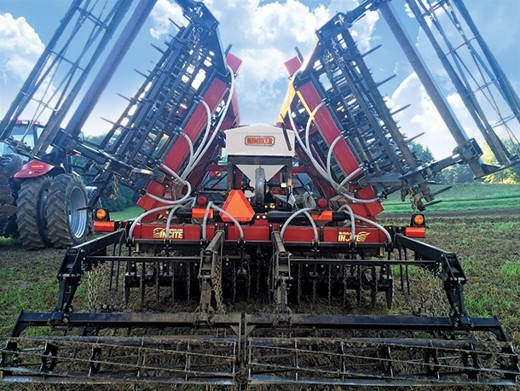
A practical guide for growers comparing field performance, setup, and ownership considerations.
Consistency starts in the hopper
A cover crop seeder for soybeans provides tremendous benefits, especially when used in a consistent operation. The useful decision regarding these machines is about finding and correcting the small mechanical differences that create visible strips after emergence. A useful starting point is this: seed mixtures can separate in transport and bridge when moisture or treatment changes their flow. In practice, the machine should be judged by what happens in the field, not by a single number in a brochure. The first things worth recording are seed condition, agitation, fill level, and equal delivery to each meter. Those observations give a dealer or operator something concrete to work from and make later adjustments easier to explain.
A wise first move is to inspect the hopper at every fill and avoid topping off over damp seed. This is also where a cover crop seeder belongs in the comparison, because the label matters less than the result it can produce in the intended conditions. Watch for assuming stainless construction eliminates every flow issue; it often turns a promising demonstration into a poor ownership experience. The target is steady supply before the metering system is asked to be precise. Write down the setting and the field condition together so the result can be repeated rather than remembered vaguely.
What a cover crop seeder for soybeans should prove in the field
This part of the decision becomes clearer when the operator stops treating field conditions as background noise. In this case, a setting is only a starting point because seed size and density alter output. Check collected weight from several outlets over a measured simulated or field distance at more than one location. A short stop and a careful look usually reveal more than another round at full speed. For a cover crop seeder for soybeans, that habit is especially valuable because small setup errors can repeat across every row or acre.
Use the machine long enough to run a catch test, weigh the samples, and compare outside and center sections. The comparison may also include cover crop seeder equipment. Ask what must change when the field is no longer ideal. The common trap is averaging away one outlet that is clearly wrong. A better standard is a calibrated baseline across the full machine. It keeps the conversation focused on crop, soil, material flow, and operator control instead of a feature list that may never matter on this farm.
Toolbar geometry shows up in the stand
Conditions seldom stay uniform from one end of a field to the other. When a toolbar that is not level changes opener angle, down pressure, and effective depth, the operator needs a setting that is understandable and quick to verify. Use frame height, wing position, gauge-wheel contact, and parallel movement as the scorecard. A cover crop seeder for soybeans should respond predictably when the operator makes one deliberate change, and the finished work should show why that change helped.
A practical routine is to set the machine on a level surface and recheck it under field load. Compare the role of cover crop interseeding equipment at the same moment, especially if it changes clearance, placement, or material flow. Avoid correcting depth at each row before correcting the frame. The better outcome is row units that begin from the same geometry. Keep the test area small until the result is stable, then check again after the machine reaches normal operating temperature and speed.
.
.
Openers need equal attention
Operators often notice worn discs, stiff pivots, and packed depth adjustments can make neighboring rows behave differently only after acres have been covered. That is why disc diameter, bearing play, seed-tube condition, and press-wheel alignment should be part of the first-pass inspection. A machine can sound normal while the work behind it is changing. Walking the pass, digging where appropriate, and comparing several rows creates a more reliable picture than watching one convenient spot.
Plan to service every row to a common standard before calibration. The role of an in row cover crop seeder should be evaluated in that same sequence, with the tractor stopped and the equipment secured whenever inspection requires it. Do not fall into replacing only the visibly failed component. Aim instead for less row-to-row variation in placement and closure. This approach also gives the next operator a clear starting point instead of a machine full of unexplained adjustments.
Field speed can expose weak spots
Capacity is useful only when the field result holds up. Here, higher speed adds bounce and changes how residue enters the opener path. Track depth at the wings, seed scatter, and toolbar movement over rough ground, then compare the result with the acres-per-hour number. This is the point where the equipment earns its place: it should help the operator hold an acceptable result through normal changes without constant guesswork. If quality falls away, reduce speed or change one setting before adding another variable.
The best test is to compare a slower and faster pass, then dig at both center and wing rows. Apply the same standard when evaluating a cover crop seeder attachment rather than assuming its name guarantees a certain result. Be cautious about checking only the convenient rows behind the tractor. What matters is a speed limit based on placement rather than schedule pressure. A documented comparison between two settings is more valuable than a long demonstration with no measurements and no agreed definition of success.
Use emergence as a diagnostic map
Ownership gets easier when the buying conversation includes the practical issue that patterns in the stand often point back to a section, row unit, wheel track, or soil zone. Confirm repeated skips, delayed rows, and differences between headlands and the field interior and decide who will handle the first question during a narrow field window. The final equipment choice should make routine setup, inspection, and service understandable to the people who will actually use it. That practical fit is part of performance, not an extra.
Before committing, photograph patterns and connect them to machine positions before changing settings. Ask how the available configuration affects the same decision and what parts, tools, or training should be on hand. Avoid making several adjustments at once; it can make a low purchase price expensive during the season. Look for clearer evidence for the next calibration. A good purchase leaves the operator with a repeatable starting setup, a safe inspection routine, and a clear source of product-specific support.
Frequently Asked Questions
How often should I recalibrate?
Recheck whenever the seed lot, mixture, treatment, drive setting, or field condition changes. A quick confirmation after the first fill can also catch settling or a setup error.
Why does my cover crop seeder for soybeans plant heavier on one side?
Start with machine level, drive engagement, hose routing, and individual meter output. Then compare seed delivery on level ground and a slope. The pattern usually narrows the search.
Do press wheels matter with small cover-crop seed?
Yes. They help manage seed-to-soil contact and slot closure, though the right pressure depends on moisture and texture. Dig behind the machine instead of judging the surface alone.
.

.
Tired of Fighting Your Farm Equipment? Let’s Make It Easier.
Reach out to us online at Hiniker to fill out a form or call us at 507-625-6621.
We are here to assist you with all your farm equipment needs. We carry the latest equipment, whether it’s cultivators, cover crop seeders, rate controllers, shredders, windrowers, or a forage chopper.
Find your Hiniker Dealer today to find out more about our amazing agricultural equipment. You can also follow us on Facebook for the latest news and updates.