



.
.
The word cultivator did not start with machines. It started with people.
Long before steel frames and hydraulic adjustments, cultivators were the individuals who worked land by hand. They prepared soil. Managed weeds. Protected crops once they were planted. Cultivation was not a tool. It was a responsibility.
That history still shapes how modern farming works today. Even as equipment has changed, the role of the cultivator has stayed focused on control rather than force.
Modern cultivator manufacturers build equipment around that same idea. Precision. Timing. And restraint.
Early cultivators worked with what they had
The earliest cultivators used simple tools. Hoes. Plows pulled by animals. Shallow implements designed to break surface weeds without disturbing crops.
These tools were slow, but they were intentional. Rows were spaced wider. Crops were tended individually. Cultivation was constant and physical.
Those early systems established the basic principle that still exists today. Cultivation happens after planting. Not before. The goal was always to protect what was already growing.
That concept did not disappear when machines arrived.
Mechanization changed scale, not purpose
As farms grew larger, manual cultivation became impossible to sustain. Equipment filled the gap.
Early mechanical cultivators were simple. Rigid frames. Fixed spacing. Limited adjustments. Operators relied on experience and steady hands to keep rows clean.
As tractors improved, so did cultivator manufacturers. Adjustable row spacing. Depth control. Better stability. These changes allowed cultivation to happen faster and across more acres.
But the purpose stayed the same. Weed control. Soil conditioning. Crop protection.
That consistency is why cultivators evolved instead of being replaced.
Manufacturers shaped modern cultivation
As equipment improved, cultivator manufacturers specialization followed.
Different regions. Different crops. Different soil conditions. A single cultivator design could not meet every need.
This is where modern cultivator manufacturers began to differentiate. Some focused-on speed. Others focused on adaptability. Others focused on reduced soil disturbance.
Companies began producing equipment tailored to specific farming systems instead of general use.
That shift mirrors how farming itself changed.
.
.
Cultivation adapted to planting systems
Row spacing became more uniform. Guidance systems improved. Planting accuracy increased.
Cultivators adapted to match that precision.
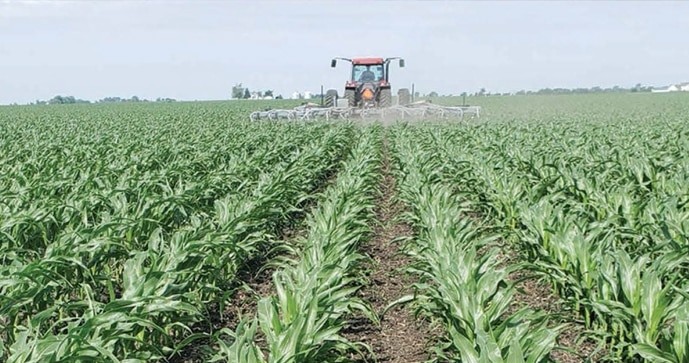
A machine designed to pass within inches of crops must track accurately. It must respond to uneven ground. It must hold depth consistently.
That is why modern row cultivator manufacturers design frames and toolbars that stay stable at speed. The goal is not aggression. It is repeatability.
Early cultivators relied on attention. Modern ones rely on design.
Different philosophies created different equipment
As farming systems diversified, so did cultivators.
No-till systems reduced soil disturbance to protect structure and moisture. That required cultivators that worked shallow and preserved residue. This led to specialized designs produced by no-till cultivator manufacturers.
Organic systems removed chemical weed control from the equation. Cultivation became essential rather than supplemental. That drove innovation from organic cultivator manufacturers who focused on adjustability and accuracy.
Larger operations needed efficiency. That demand led to equipment built by high speed cultivator manufacturers that could cover acres quickly without sacrificing control.
Each approach traces back to the same original purpose, adapted to different constraints.
Dealers connect history to practice
Equipment does not exist in isolation. It has to fit real farms.
That is where cultivator dealers play a role that mirrors early cultivators themselves. They help match tools to conditions. They understand regional differences. They see what works and what does not.
Early cultivators learned by watching fields respond. Modern dealers learn by supporting equipment across many operations.
That feedback loop continues to shape how cultivators are designed.
Cultivation remains a judgment call
Technology has improved consistency. It has not eliminated decision-making.
Cultivators still require timing. Field awareness. Adjustment. Knowing when to pass and when to stay out.
The difference is that modern cultivator manufacturers produce machines that reduce variability. It gives cultivators better tools to execute decisions effectively.
That combination of judgment and design is what keeps cultivation relevant.
Why the origin still matters
Understanding who the original cultivators were explains why modern equipment looks the way it does.
Cultivators were never meant to dominate the field. They were meant to manage it carefully.
That mindset carries through today’s machines. Controlled depth. Targeted movement. Minimal disruption.
Modern cultivation is faster. More precise. More adaptable. But it still follows the same basic rules established centuries ago.
FAQ
Who were the original cultivators?
They were the people who managed soil and weeds by hand after crops were planted.
When did mechanical cultivators appear?
As farms grew larger and animal power gave way to tractors.
Why did cultivators evolve instead of disappearing?
Because weed control and soil management are still necessary after planting.
Do modern cultivators replace older methods?
They expand on them, increasing scale and consistency.
Are cultivators still tied to human decision-making?
Yes. Cultivator manufacturers support decisions but does not replace judgment.
Tired of Fighting Your Farm Equipment? Let’s Make It Easier.

Reach out to us online at Hiniker to fill out a form or call us at 507-625-6621
We are here to assist you with all your farm equipment needs. We carry the latest equipment, whether it’s cultivators, cover crop seeders, rate controllers, shredders, windrowers, or a forage chopper.
Find your Hiniker Dealer today to find out more about our amazing agricultural equipment.
You can also follow us on Facebook for the latest news and updates.