



.
.
Cover crop seeding equipment can make cover crop planting more consistent, especially when the season does not leave much room for delay. Cover crops often have to be seeded between harvest, weather, field traffic, and the first hard cold snap. That window can be tight.
The right seeding equipment helps you get seed placed or distributed at the right rate while the opportunity is still there. It does not control the weather, but it can make the job easier to repeat.
Start with your timing
Cover crop success often depends on timing more than almost anything else. Some covers need to be seeded after harvest. Others work better when interseeded into a standing crop. Some species need more fall growth than others.
Cover crop seeders should be chosen with that calendar in mind. If harvest usually runs late, capacity may matter. If you want an earlier start, interseeding may be more important.
Think through the acres and the likely field days. How many acres need to be seeded? How fast does the machine need to move? What tractor or toolbar will be available?
The seeder has to fit the season you actually have.
Why cover crop seeding equipment needs accurate metering
Cover crop seed can be tricky. Small seeds, large seeds, and mixed blends do not all flow the same way. A seeder that handles one seed well may need extra attention with another.
Accurate metering helps protect seed cost and stand quality. Too light, and the stand may be thin. Too heavy, and seed is wasted. Uneven distribution can create patchy growth that is hard to judge later.
Calibration is worth doing. It may feel like one more step during a busy season, but it is faster than wondering why a field emerged poorly.
A cover crop is still a crop. The seeding pass deserves care.
Interseeding changes the equipment needs
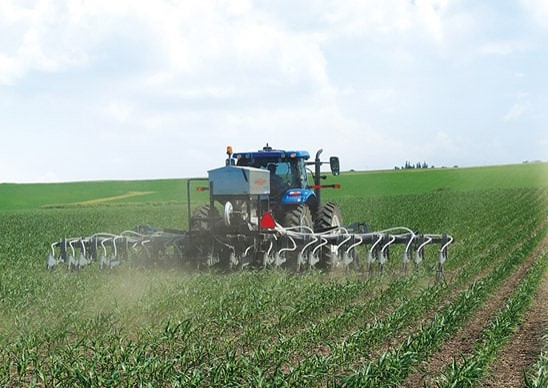
A cover crop interseeder is built around a different timing strategy. Instead of waiting until harvest, it lets growers seed into a standing crop when the cover has more time to establish.
That approach can be useful, but it asks more from the equipment. The seeder has to work around crop rows, handle clearance, and place seed without causing unnecessary crop damage.
Crop stage matters. Seed too early, and competition may be a concern. Seed too late, and establishment may be weak. Equipment cannot solve every timing issue, but it can make the right window easier to use.
If interseeding is part of the plan, choose equipment for that job from the start.
.
 .
.
Row fit and field traffic matter
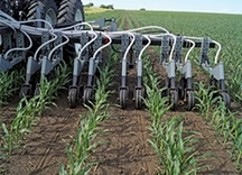
An inter row seeder has to work inside your existing row system. Row spacing, toolbar setup, tires, headlands, and field shape all matter.
This is where a practical check helps. Will the seeder stay centered? Does it have enough clearance? Can it handle your acres at the speed you need? Is it easy to fill, calibrate, and clean out?
Field traffic matters too. Wet soil can make extra passes risky. Tall crops can reduce visibility. Irregular fields can slow everything down.
The best seeder fits into the operation without making the season more complicated.
Flexibility helps as the cover crop plan changes
Cover crop programs often evolve. A farm may start with cereal rye, then try mixes, then add interseeding, then change rates based on goals.
A cover crop seeder should have enough flexibility for the jobs you expect now and the ones you may grow into. Seed capacity, metering range, mounting options, and cleanout all matter.
If changing seed mixes is difficult, the machine may discourage experimentation. If calibration is simple, it is more likely to happen. If the seeder is easy to clean out, switching species feels less like a chore.
Good equipment makes the right habit easier.
Think about residue and soil cover
Cover crop seed needs a fair chance to germinate. Heavy residue, dry soil, and uneven ground can all affect emergence.
Growers using no-till cultivators or other reduced-disturbance systems often care about keeping soil protected. Cover crop seeding equipment should fit that mindset. It should work with residue instead of fighting it.
In some fields, broadcast seeding may work well. In others, seed-to-soil contact may be the weak point. The right choice depends on the soil, residue, moisture, and species.
Walk the field after seeding. Early feedback helps improve the next pass.
A reliable seeding pass makes the program repeatable
Cover crops become easier to manage when the seeding pass is dependable. The equipment should help you hit timing, rate, and placement without making every acre feel uncertain.
That is the value of well-matched cover crop seeding equipment. It helps turn a good intention into a field operation that can happen on schedule.
When the pass is consistent, the cover crop plan becomes easier to trust.
FAQs
What matters most when choosing a cover crop seeder?
Timing, seed mix, metering accuracy, acre capacity, and how the seeder fits your current equipment.
Do I need interseeding equipment?
Only if you want to seed into a standing crop. That job needs clearance, row fit, and careful timing.
How accurate should cover crop seeding equipment be?
Accurate enough to trust the rate across the field, especially with blends or small-seeded covers.
Tired of Fighting Your Farm Equipment? Let’s Make It Easier.

Reach out to us online at Hiniker to fill out a form or call us at 507-625-6621
We are here to assist you with all your farm equipment needs. We carry the latest equipment, whether it’s cultivators, cover crop seeders, rate controllers, shredders, windrowers, or a forage chopper.
Find your Hiniker Dealer today to find out more about our amazing agricultural equipment.
You can also follow us on Facebook for the latest news and updates.