



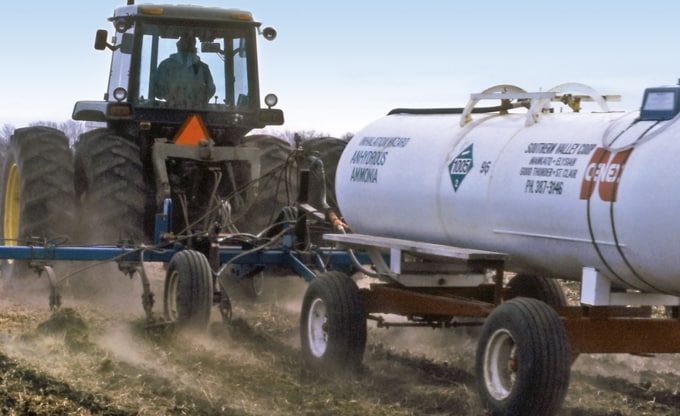
Automatic rate controllers are easy to appreciate after a grower has spent enough seasons trying to keep application work consistent by hand. Rates change, speeds change, field conditions change, and the operator still needs the product going out at the right amount. When that job is handled well, the field pass feels steadier. When it is not, the cost can show up in wasted input, uneven results, or both.
The field does not stay perfectly consistent
Application work would be simpler if every acre acted the same. It does not. Ground speed changes at turns, terraces, rough spots, and wet areas. Tanks get lighter. Pressure changes. Equipment reacts to the field in small ways all day.
A controller helps take some of that constant correction off the operator. It does not replace attention, but it gives the system a way to respond when conditions shift. That matters with expensive inputs and tight margins.
For fertilizer, especially, a little sloppiness can add up. Overapplication wastes money and can create agronomic problems. Underapplication may leave yield potential on the table. Neither one feels good when the season is over and the maps tell the story.
Why automatic rate controllers matter in the cab
The cab is already busy. The operator is watching the toolbar, the monitor, the field edge, the next pass, and the weather that might be coming in faster than expected.
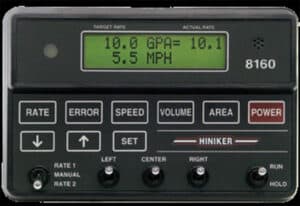
A good controller keeps the rate work from becoming one more thing that needs constant hand-holding. It should respond predictably, display information clearly, and make it easier to see whether the system is doing what it should.
This is especially useful when acres are long and the day is longer. Fatigue causes mistakes. A controller that helps keep the rate steady can make the work less dependent on perfect operator attention every minute.
That does not mean the operator stops paying attention. It means the operator has better help.
NH3 work raises the stakes
Anhydrous ammonia is not an input most growers treat casually. It has safety concerns, cost concerns, and crop-performance concerns. That is why NH3 ammonia rate controllers matter on operations that rely on NH3.
The goal is not just to apply product. The goal is to apply the intended amount across acres that rarely behave exactly the same. Speed changes and flow changes need to be managed in real time.
A good system should make it easier to know the rate is staying where it belongs. It should also make problems more visible before they turn into a field-wide issue. That kind of information can save product, protect the crop plan, and reduce the stress of the pass.
Flow monitoring helps catch the things you cannot see
A lot is happening behind the toolbar that the operator cannot easily see from the seat. A plugged line, restricted flow, or uneven delivery can create a problem that only becomes obvious later.
That is where an anhydrous flow monitor earns attention. It gives the operator a better window into the system. Instead of assuming product is moving correctly, the operator can see whether something is off.
The same thinking applies to an NH3 flow monitor. A monitor cannot make every problem disappear, but it can help catch a problem while there is still time to stop and fix it. That is the difference between a small delay and a disappointing strip through the field.
Manufacturer support is part of the decision
The equipment itself matters, but so does the thinking behind it. An automatic rate controller manufacturer should understand how the product is used in real conditions, not just in neat diagrams.
Growers need controls that make sense during a working day. Menus should be understandable. Information should be clear. The system should be rugged enough for fertilizer work, field vibration, dust, temperature swings, and the general abuse that comes with the season.
Support matters too. When questions come up, growers need useful answers. A controller is not a decorative piece of technology. It is part of a working system, and downtime is not just inconvenient when application windows are tight.
Application accuracy is about more than saving product
Saving input is one reason growers care about rate control, but it is not the only one. Consistent application helps the crop plan stay on track. It helps the operator trust the pass. It can also make records and field decisions cleaner later.
Anhydrous ammonia rate controllers fit into that bigger picture. The controller is part of a chain that includes the tank, plumbing, toolbar, knives, monitor, operator, and field conditions.
If one part of that chain is hard to read, the whole job gets more stressful. If the controller and monitoring setup communicate clearly, the operator can respond sooner and make better decisions.
The right automatic rate controllers should make application work feel less like chasing a moving target. They should help the grower apply what was planned, notice what is changing, and finish the pass with fewer unanswered questions.
FAQs
Do rate controllers replace operator judgment?
No. They help manage the rate, but the operator still has to watch the field, the toolbar, and the system.
Are automatic rate controllers only useful for large farms?
They can be useful for all farms. Any farm trying to control input costs and keep rates consistent can benefit from better application control.
What is the biggest benefit of monitoring flow?
It helps catch problems early. A plugged or restricted line is much easier to fix when the operator knows about it during the pass.
Tired of fighting your farm equipment? Let’s make it easier. Reach out to us online at Hiniker to fill out a form or call us at 507-625-6621.
.

.
We are here to assist you with all your farm equipment needs. We carry the latest equipment, whether it’s cultivators, cover crop seeders, rate controllers, shredders, windrowers, or a forage chopper.
Find your Hiniker Dealer today to find out more about our amazing agricultural equipment.
You can also follow us on Facebook for the latest news and updates.